
 Raksha
In the rapidly evolving world of artificial intelligence, precise and efficient data annotation has become the cornerstone of success. Whether you’re training a self-driving car to recognize a stop sign or teaching a generative model to understand audio, high-quality annotated data is what makes intelligent predictions possible.
This is where AI multi-modal annotation (sometimes called multi-model annotation) steps in. By providing accurate labels across multiple data types, images, text, audio, and video, multi-modal annotation equips AI systems to handle the complex, real-world inputs that define today’s applications.
In this article, we’ll explore why multi-modal annotation matters and highlight top service providers helping businesses and researchers build better models, faster.
Understanding AI Multi-Modal Annotation
AI multi-modal annotation is the process of labeling datasets that span multiple formats—text, images, audio, and video—to train machine learning models. Unlike single-modality labeling, which might focus solely on text or images, multi-modal annotation provides the comprehensive data coverage needed for next-generation AI models that can see, hear, and interpret the world.
- By creating robust and diverse datasets, multi‑model annotation enables models to:
- Recognize and process multiple input types
- Make more accurate predictions across scenarios
- Generalize better to real‑world conditions

Why Multi-Modal Annotation Matters
The importance of multi‑model annotation lies in three core benefits:
- Diversity of Data
Modern AI systems thrive on variety. By annotating across multiple formats, your models can handle images, text, audio, and video in a single pipeline, reflecting the multimodal nature of real-world inputs your product will encounter. - Improved Model Accuracy
High-quality annotations are the foundation of effective AI. When labels are accurate and consistent across all modalities, your models can learn faster, reduce noise, and produce more reliable predictions in production. - Scalability for Growing Projects
As your AI initiative expands, so does the demand for data. A good multi-modal annotation service provider gives you scalable workflows, so you can increase annotation volume, launch new languages or domains, and keep quality under control.
Top Service Providers for AI Multi-Modal Annotation
There are dozens of multi-modal annotation service providers, but the right partner depends on your data types, quality requirements, and budget. Here’s a quick comparison of some of the best-known options before we dive into each one. Here’s a look at the leading service providers that can help you deliver high‑quality multi‑model datasets.
1. Twine AI
Twine AI combines multi-modal data annotation expertise with a global network of over 850,000 vetted freelancers, making it a compelling choice for companies looking for flexible, high-quality data labeling at scale.
What sets Twine AI apart:
- Comprehensive coverage: Text, image, audio, and video annotation
- Reinforcement Learning with Human Feedback (RLHF) for advanced AI model alignment
- Diverse, scalable workforce to ensure representative and bias‑aware datasets
- Flexible engagement model, from small proof‑of‑concepts to full production pipelines
Twine AI has quickly become a preferred partner for leading startups and enterprises building the next generation of multi‑modal AI systems.

2. Scale AI
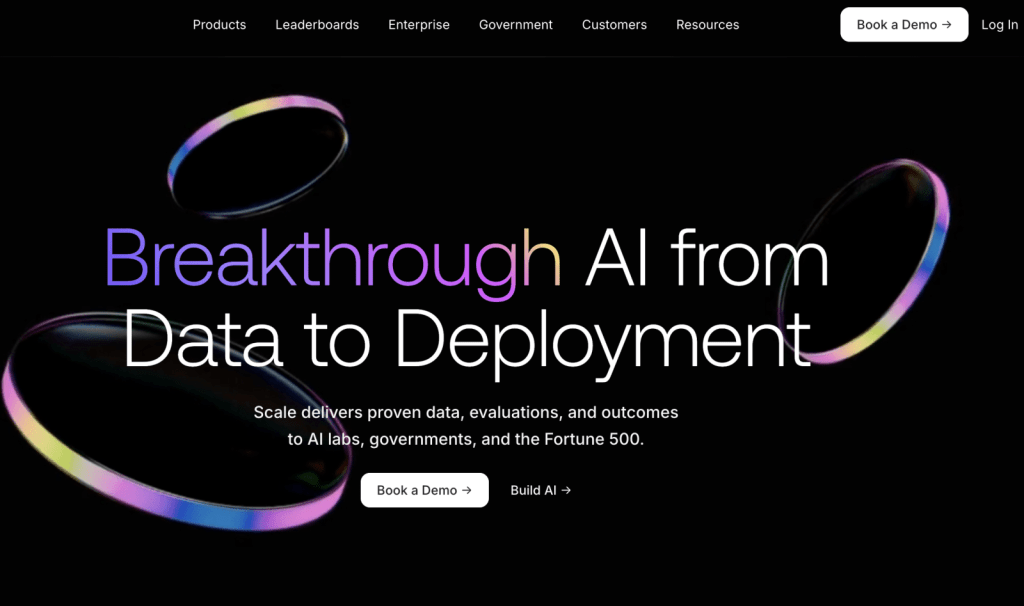
Scale AI is a pioneer in the data annotation space, trusted by leading enterprises and AI labs. Its platform supports text, image, video, and sensor data, making it ideal for large‑scale projects like autonomous driving and generative AI. For teams running large, complex AI multi-modal annotation programs, Scale AI’s platform offers strong automation and QA controls.
Key strengths:
- Image and video annotation for tasks like object detection, segmentation, and 3D labeling
- Text annotation including entity recognition and sentiment analysis
- Rigorous quality assurance to maintain industry‑leading accuracy
3. Appen
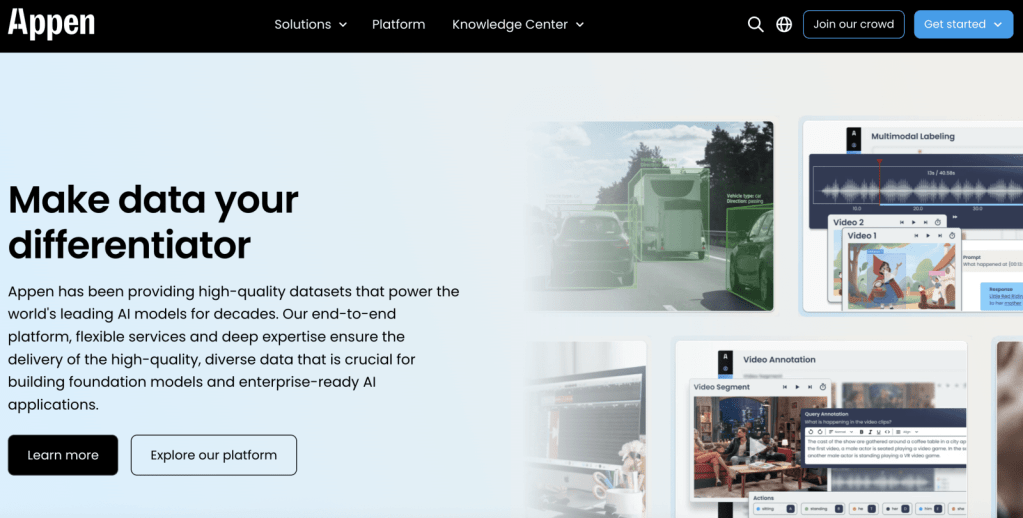
Appen leverages a global, crowdsourced workforce to provide highly scalable annotation services across multiple data types. With decades of experience, it is especially effective for multi‑language and culturally diverse projects. If your multi-modal AI project has strict localization needs, Appen’s experience with multilingual annotation services is particularly valuable.
Why businesses choose Appen:
- Diverse annotator base for multilingual and global projects
- Support for all major data types: text, audio, image, and video
- Flexible, custom solutions to meet unique project requirements
4. Amazon SageMaker Ground Truth
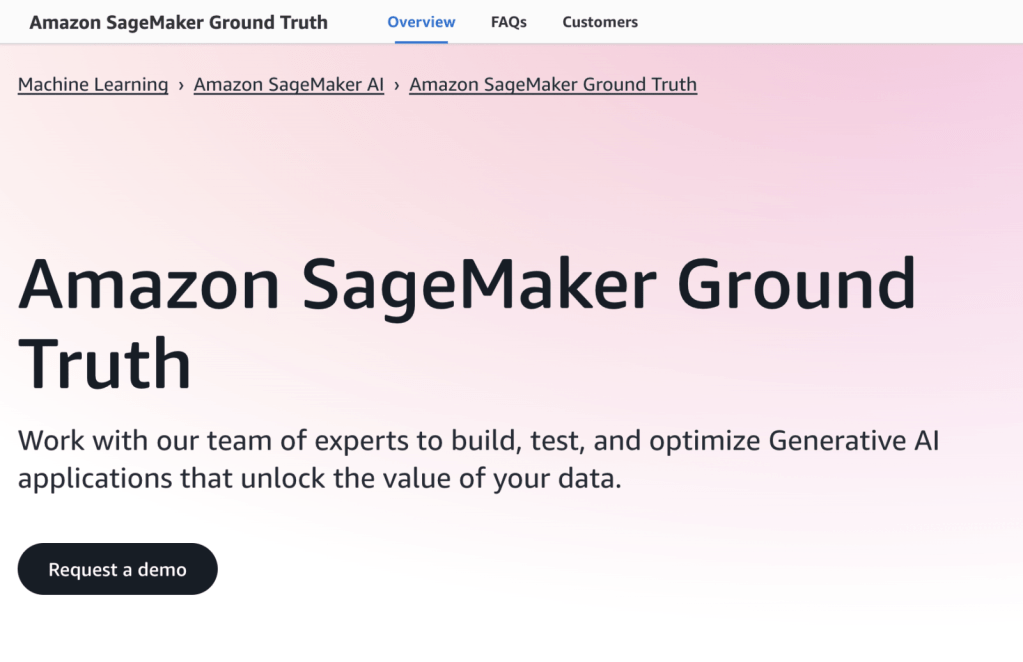
For teams already using AWS, SageMaker Ground Truth offers a seamless solution for creating and managing multi‑model datasets. Ground Truth is a natural fit if your data science team already relies on AWS and wants to manage multi-modal labeling workflows without leaving that ecosystem.
Key features include:
- Automated data labeling using machine learning to reduce costs
- Human review options to maintain high accuracy
- Native AWS integration, streamlining large‑scale data management
5. Labelbox
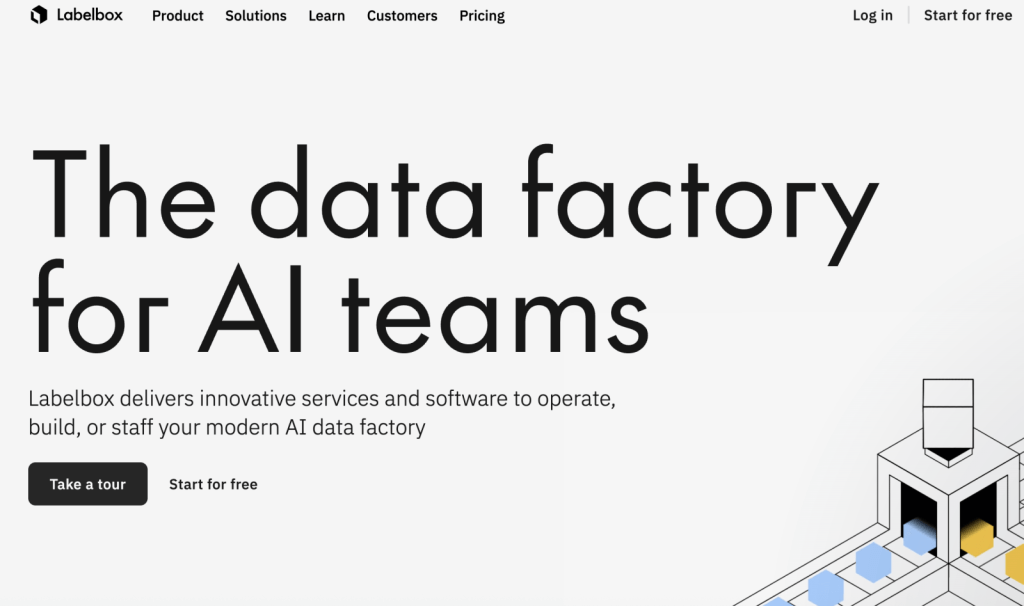
Labelbox stands out for its user‑friendly interface and collaboration features, making it a favorite among startups and enterprise AI teams alike. Labelbox works well for teams that want to own their multimodal training data strategy and keep annotation tightly integrated with their internal tools.
Highlights:
- Intuitive dashboard for easy annotation management
- Real‑time collaboration for distributed teams
- Analytics and quality metrics to track dataset performance
Choosing the Right Provider for Your Needs
With so many options available, selecting the right partner for AI multi-modal annotation can be daunting. Focus on a few key decision points:
- Project requirements
Define which data types you need annotated (text, images, audio, video, sensor data) and how complex the tasks are (simple classification vs. dense segmentation, dialogue labeling, RLHF, etc.). - Quality assurance
Ask how each provider measures and enforces quality: gold-standard datasets, consensus labeling, reviewer tiers, or automated checks. Reliable quality is non-negotiable for effective AI training. - Budget and scalability
Consider how pricing changes as your volume grows. Some platforms are designed for huge enterprise workloads, while others offer more flexible pricing for pilots and small teams. - Domain and language expertise
For niche industries like healthcare, legal AI, or financial services, you’ll want annotators with domain knowledge and strong language coverage, not just generic crowd workers. - Human-in-the-loop workflows
If you’re training advanced models or using RLHF, check whether the provider supports iterative, human-in-the-loop processes rather than one-off labeling jobs.
Shortlisting 2–3 providers and running a small paid pilot with the same dataset is often the best way to compare quality, speed, and communication.
Final Thoughts
In today’s AI landscape, data is the differentiator. Multi-modal annotation ensures your models have the rich, diverse inputs they need to perform accurately in the real world, across text, images, audio, and video.
Choosing the right provider is less about brand recognition and more about fit. Look for partners who understand your domain, support the data types you care about, and can scale quality as your dataset grows. Twine AI, Scale AI, Appen, Amazon SageMaker Ground Truth, and Labelbox each bring different strengths, from curated workforces to deep cloud integration and advanced tooling.
If you need a flexible, human-in-the-loop approach with access to specialist annotators across many regions and languages, Twine AI is a strong option. You can start with a small proof-of-concept, refine your labeling guidelines, and then scale to full production pipelines as your model matures.


 Twine
Twine
 Twine AI