2D Game Character Design & Sprite Sheet Animation
Ayomide Niniola
Published
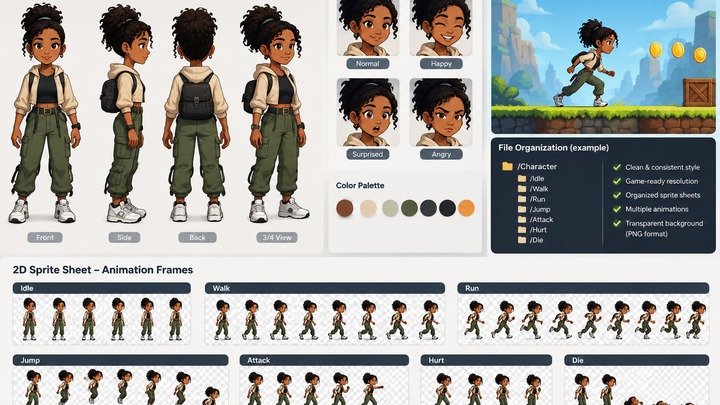
This project is a demonstration of my approach to creating 2D game character artwork and animation assets for video game development. The focus is on developing a consistent base character that can be adapted into multiple poses, movements, expressions, and gameplay animations.
The character was designed with game use in mind, including a clear silhouette, recognizable features, consistent proportions, and clothing details that remain visually consistent throughout different animation states. The goal is to make the character easy to understand during gameplay while also giving the character enough personality to feel engaging and memorable.
The project includes a front view, side view, back view, and 3/4 view of the base character to establish a strong visual reference before creating animation frames. Having these reference views helps maintain consistency when producing additional poses and movements.
I also developed example animation states including idle, walking, running, jumping, attacking, taking damage, and defeat. Each animation uses a sequence of individual frames that can be arranged into sprite sheets for use in a game engine.
The animation concepts are designed to communicate clear movement from frame to frame. For example, the walk and run cycles show changes in leg position, arm movement, body posture, and weight distribution, while the jump sequence focuses on anticipation, movement through the air, and landing. The attack sequence demonstrates how the character can transition from a neutral position into an action pose and return to the base movement.
The character also includes several facial expressions such as normal, happy, surprised, and angry, showing how the same character design can communicate different emotions without changing the core identity of the character.
For a real game project, I would work closely with the developer to understand the required sprite dimensions, frame count, animation speed, naming conventions, transparency requirements, game-engine limitations, and final export format. This helps ensure that the artwork is not only visually consistent but also practical for implementation.
The example file organization includes separate folders for animations such as:
Idle
Walk
Run
Jump
Attack
Hurt
Die
The final assets can be prepared with transparent backgrounds and organized animation frames, making them easier for a developer to import and integrate into the project.