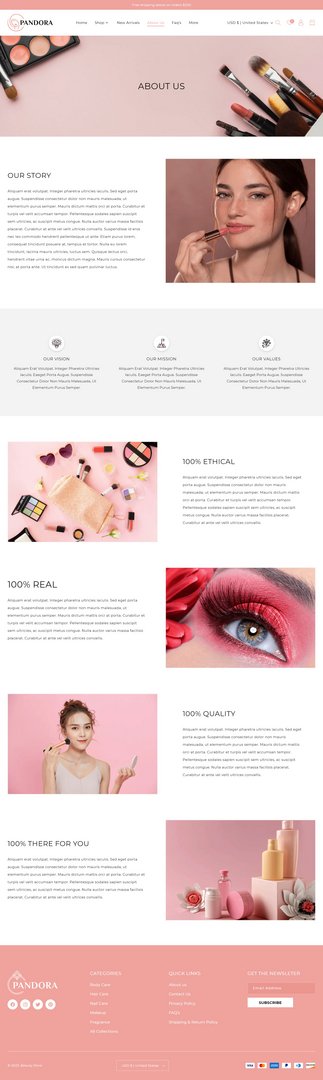
Beautiful Ecommerce Store - Pandora
Oluwabamidele
Published
Responsive Design: Ensures the website looks and functions well on various devices, providing a seamless user experience across desktops, tablets, and mobile devices.
Intuitive Navigation: Easy-to-use navigation menus and clear site structure help visitors find information quickly and enhance overall user experience.
Compelling Visuals: High-quality images, graphics, and multimedia elements create a visually engaging website that captures visitors’ attention.
Clear Call-to-Action (CTA): Strategically placed and well-designed CTAs guide users toward desired actions, such as making a purchase or contacting the business.
Readability and Typography: Legible fonts, appropriate font sizes, and proper line spacing contribute to easy readability and a polished appearance.
Consistent Branding: Uniform use of colors, fonts, and visual elements ensures a cohesive and professional brand identity throughout the website.
Loading Speed Optimization: Fast loading times improve user experience and positively impact search engine rankings. Optimize images and minimize unnecessary scripts for quicker load times.
User-Friendly Forms: Simplified and well-designed forms make it easy for visitors to submit information, sign up, or make purchases without frustration.
Search Functionality: A search bar helps users quickly find specific content, products, or information within the website.
Social Media Integration: Connect with your audience by integrating social media links, share buttons, or embedded feeds to encourage social engagement and sharing.
Security Features: Implement SSL certificates for secure data transmission, and keep software and plugins up-to-date to prevent security vulnerabilities.
Content Hierarchy: Organize content with a clear hierarchy, using headings and subheadings to guide users through the page’s structure.
Mobile Optimization: Design with a mobile-first approach to ensure a smooth experience for users accessing the website on smartphones and tablets.
Accessibility Features: Make the website accessible to all users, including those with disabilities, by incorporating alt text, captions, and other accessibility features.
Interactive Elements: Engage users with interactive elements such as sliders, carousels, or animated graphics that enhance the overall user experience.
Feedback and Contact Options: Include contact forms, live chat, or other feedback options to encourage user interaction and provide avenues for communication.
Loading Screen Animations: Delight users with subtle loading screen animations that add a touch of sophistication to the browsing experience.
Content Management System (CMS): Utilize a user-friendly CMS like WordPress or others to easily update and manage website content.
Cross-Browser Compatibility: Ensure the website functions properly on various browsers, such as Chrome, Firefox, Safari, and Edge.
Analytics Integration