Retail Fraud Analysis
Samuel Maina
Published
Retail businesses face a tough balancing act: missing real fraud drains revenue, while excessive security flags can disrupt legitimate customers.
I built an end-to-end fraud analytics project using 100,000 retail transactions to uncover fraud patterns and risk exposure across payment methods, merchant categories, account age, transaction behavior, and locations.
The Data Challenge & Solution
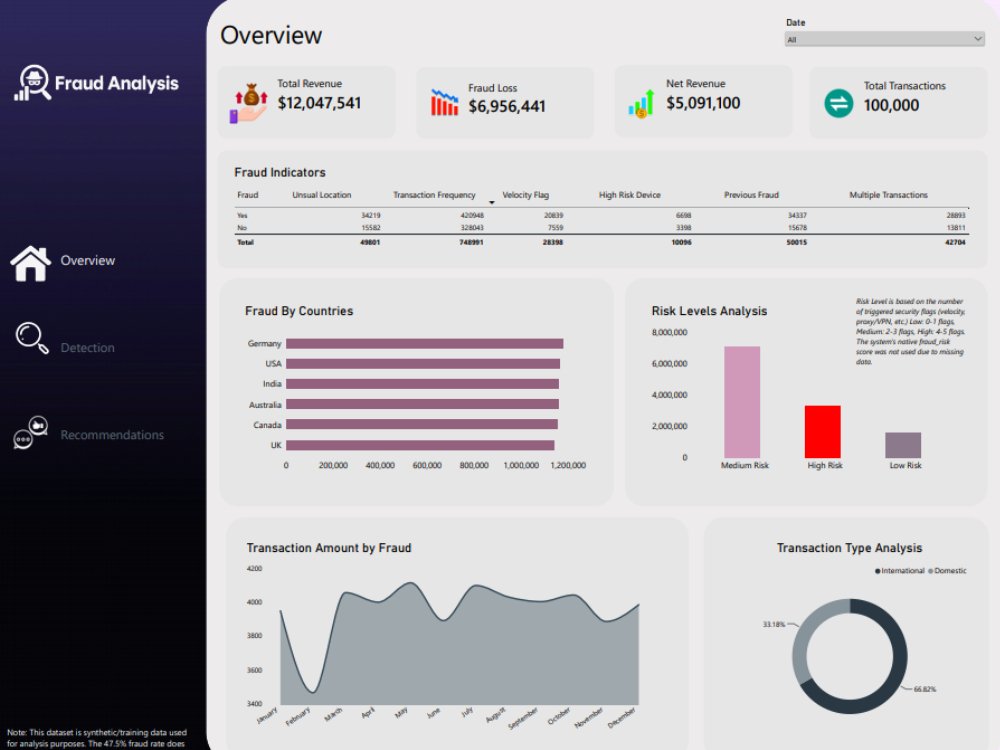
Data profiling revealed that the native fraud-risk score was broken, flatlined at 0.0 across all records, while two location-related fields contained duplicate information. Instead of fabricating a risk score, I engineered a transparent Risk Level classification (Low, Medium, High) using behavioral security indicators including velocity, proxy/VPN usage, and high-risk devices.
Technical Execution
SQL: Cleaned data, removed duplicates, standardized formatting, and handled null values.
Power BI: Built an interactive 3-page dashboard: Overview, Detection, and Recommendations.
Key Findings
• Medium Risk transactions carried the highest financial exposure at approximately $7.1M, followed by High Risk at $3.3M.
• Fraud was concentrated in lower transaction-value brackets ($0–$500).
• Domestic transactions accounted for 66.8% of activity, versus 33.2% international.
• Analysis covered payment methods, merchant categories, account age, transaction frequency, velocity indicators, and countries.