Amber Glass Bottle Essential Oil Photography
chen li hui
Published
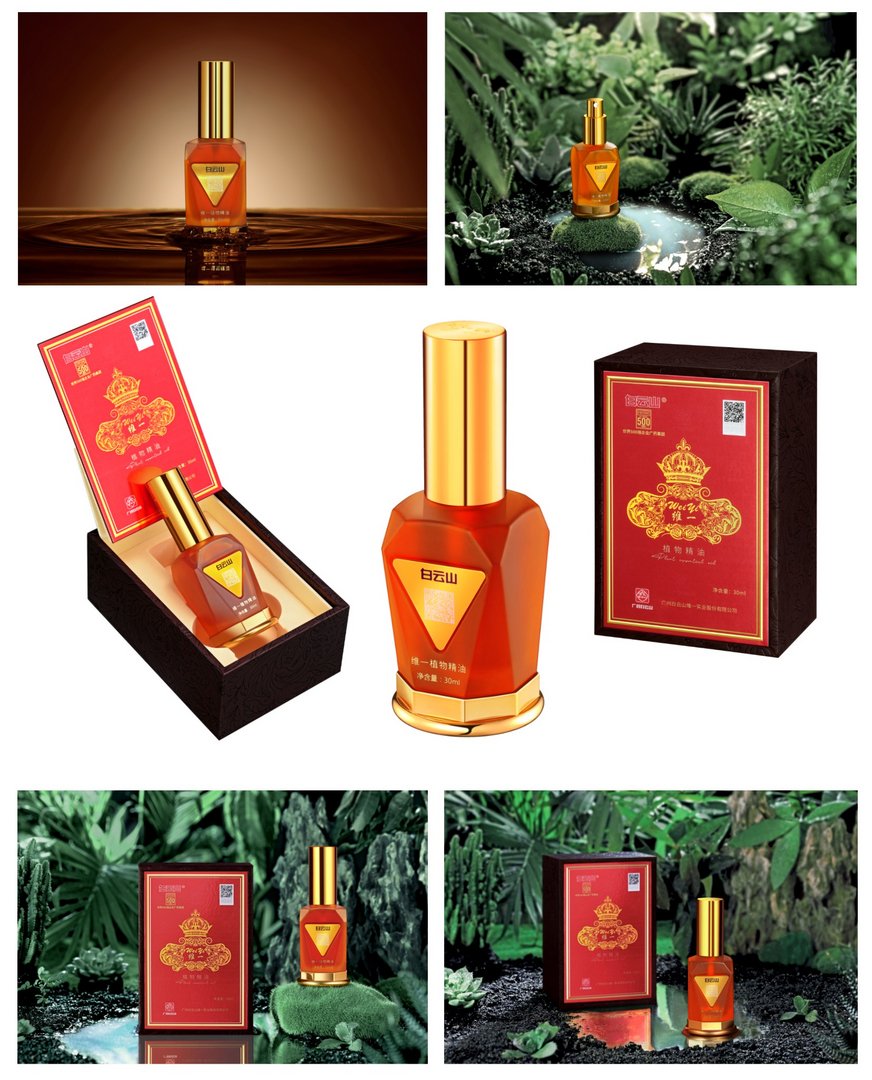
The bottle must look translucent — Amber glass requires side backlighting: the light should come in from behind and to the side of the bottle so the body lights up. Add a reflector at the front to fill in; don’t let the label side go dark. The water-surface version in the upper left and the moss version in the upper right both follow this approach.
Eliminate reflections on the glass — The toughest part of shooting a single bottle straight on (the middle one) is that the light box will reflect on the glass. Move the lights forward, backward, left, and right until the highlight falls exactly on the curve of the bottle, keeping the label area clean. Light the gold cap separately with a hard light to create a rim light, so the metallic feel comes through.
Don’t let the styling steal the show — The greenery, moss, and water surface are all supporting elements; the bottle is the subject. Blur the background plants with a wide aperture, and keep only a thin strip of water reflection to add depth. Don’t overcrowd the scene and drown out the product. For the gift box versions (the two in the middle), focus on clearly capturing the packaging text and lining; a 45-degree overhead angle is the most reliable.
In one sentence: use side backlight to make the bottle glow through, adjust the light positions to eliminate glass reflections, and blur the styling to set off the subject. Nailing this product shot comes down to these three steps.