Melio
Melio
Here’s the thing about hiring global talent: finding the right person for the job has never been easier. With platforms like Twine connecting you to over 750,000+ skilled freelancers across 190+ countries, you can have a world-class designer in Argentina, a developer in India, and a content strategist in the UK—all working on your project by next week.
But that’s where most businesses hit a wall: the payments.
Picture this: You’ve just hired an incredible motion designer in Brazil through Twine. The hiring process was seamless—portfolio review, quick interview, project scope agreed upon. Then comes payment day. Suddenly, you’re navigating wire transfer fees, confusing currency conversions, and a five-day processing window. The contractor is asking when to expect payment, and you’re stuck explaining international banking delays. You’ve solved the hard problem of finding the perfect talent, only to get tripped up by what should’ve been the easy part.
While global freelance platforms have revolutionized how we find talent, the payment infrastructure hasn’t quite caught up yet. Let’s talk about how to build a truly global team—and actually pay them without the headaches.
Why global talent is worth the effort
Before we dive into solutions, let’s acknowledge why this matters. The global talent pool isn’t just a nice-to-have anymore—it’s become a competitive advantage.
When you limit your search to local talent, you’re competing with every other business in your area for the same small pool of specialists. Expand globally, and suddenly you have access to experts in niche skills, often at more competitive rates, with diverse perspectives that can strengthen your projects.
The benefits are clear:
- Specialized expertise – Need a 3D animator who specializes in medical visualization? Or a UX designer with fintech experience? Global platforms give you access to specialists you might never find locally.
- Cost efficiency – Not about finding “cheap” labor, but finding fair rates that match different cost-of-living standards worldwide.
- Time zone advantages – A designer in Asia can work while your US team sleeps, effectively creating a 24-hour production cycle.
- Diverse perspectives – International collaborators bring fresh approaches and cultural insights that strengthen creative work.
The challenge isn’t whether to hire globally—it’s how to do it smoothly.
The real challenges of paying international contractors
Let’s get specific about where things get complicated. It’s not just one obstacle—it’s a stack of them.
The hidden costs add up fast
International wire transfers look straightforward until you see the bill. You’re paying:
- Sending fees from your bank (~$15-$30 per transfer)
- Receiving fees that your contractor’s bank charges them (~$10-$25)
- Currency conversion markups beyond the stated exchange rate (typically 3-5%)
- Intermediary bank fees if the transfer routes through additional banks
A $1,000 payment can easily cost you $75-$100 in combined fees, and your contractor might only receive $925 after their bank takes its cut.
Processing times create cash flow problems
In today’s instant-everything world, 5-10 day processing times for international payments feel archaic. But that’s standard for traditional wire transfers.
This creates real problems:
- Contractors waiting over a week for payment they’ve already earned
- Difficulty planning cash flow for time-sensitive projects
- Strained relationships when talented freelancers can’t pay their bills on time
- Competitive disadvantage when other clients offer faster payment options
Payment method compatibility issues
Not all payment platforms work everywhere. PayPal isn’t available in 28 countries and has limited functionality in many others. Some contractors don’t have access to certain banking infrastructure. Others prefer local payment methods you’ve never heard of.
You end up managing multiple payment platforms just to accommodate different contractors—each with its own fees, interfaces, and reconciliation requirements.
The compliance maze
International contractor payments come with regulatory requirements that domestic payments don’t:
- Tax documentation like W-8BEN forms for US businesses
- Potential withholding obligations depending on the contractor’s country
- Varying local regulations about contractor classifications
- Record-keeping requirements for international transactions
Miss any of these, and you could face penalties or audit complications down the line.
Building a streamlined global payment system
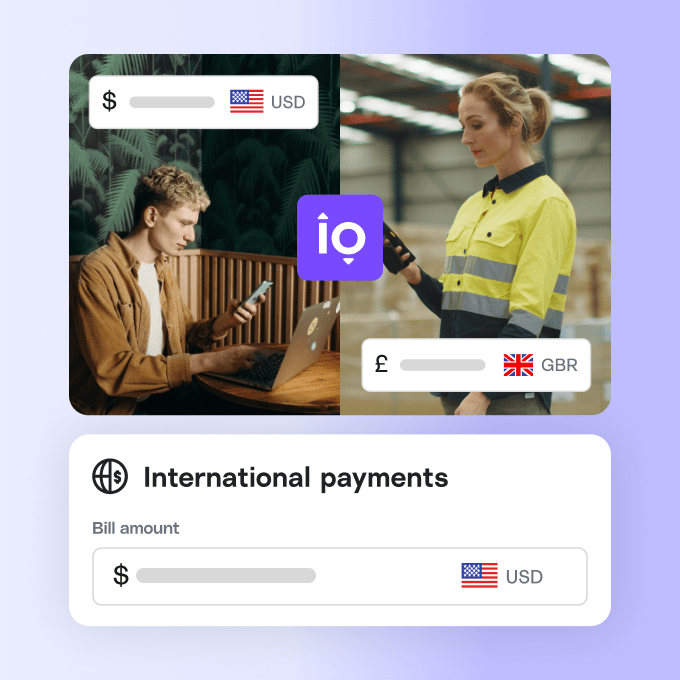
Here’s the good news: you don’t need to accept these challenges as inevitable. Modern payment solutions are designed specifically to solve these problems.
Choose the right payment platform
Not all payment platforms are created equal for international contractor payments. Look for solutions that offer:
Flexible payment methods – The ability to pay with your preferred method (like a credit card) while contractors receive funds in their preferred format (bank transfer, local currency). Platforms like Melio bridge this gap by letting you pay with a card even when contractors only accept wire transfers.
Transparent pricing – Avoid platforms with hidden conversion markups. The best solutions show you exactly what you’ll pay and what your contractor will receive.
Fast processing – Next-day or same-day delivery should be standard, not premium. Your contractors shouldn’t wait a week for money they’ve earned.
Multi-currency support – Pay contractors in their local currency to avoid forcing them to absorb conversion costs and exchange rate risk.
Integrate with your existing systems
Your payment solution shouldn’t exist in isolation. Look for platforms that:
- Sync automatically with QuickBooks, Xero, or your accounting software
- Maintain clear records for tax time
- Let you manage all contractor payments in one dashboard
- Provide transaction histories you can easily access
Solutions like Melio excel here by offering seamless two-way sync with major accounting platforms, ensuring your books stay accurate without manual data entry.
Establish clear payment terms upfront
Technology solves part of the problem, but clear communication solves the rest:
Set expectations early:
- How you’ll process payments (platform, method, currency)
- Standard payment timeline (net 15, net 30)
- What documentation you need from contractors
- How you’ll handle any payment issues
Create a simple onboarding process:
- Collect tax forms and payment details before the first project starts
- Test a small payment to verify everything works
- Provide contractors with a point of contact for payment questions
Be consistent:
- Pay on the same schedule every time
- Use the same platform for all contractors when possible
- Communicate proactively if any delays occur
Managing your global team effectively
Payment is crucial, but it’s just one piece of the puzzle. To truly succeed with global talent, you need solid operational practices.
Communication is everything
Time zones and language differences can create friction, but they don’t have to:
Document everything – Written communication creates a record and gives everyone time to process information in their own timezone.
Use collaborative tools – Platforms like Slack, Asana, or Trello keep everyone aligned regardless of when they’re working.
Schedule strategically – For synchronous meetings, rotate “off-hours” meetings so the burden doesn’t always fall on the same people.
Over-communicate expectations – What seems obvious to you might not be clear to someone in a different business culture. Be explicit about deadlines, deliverables, and feedback processes.
Build trust through reliability
Your global contractors can’t walk into your office or grab coffee with you. Trust comes from consistency:
- Pay on time, every time (this is where a reliable payment platform matters most)
- Respond to messages promptly, even if just to acknowledge receipt
- Give clear, actionable feedback on work
- Treat contractors as valued team members, not interchangeable vendors
Scale thoughtfully
Start small while you learn the ropes:
Begin with 1-2 international contractors on smaller projects. Work out your payment systems, communication rhythms, and project management approaches before scaling up.
Document your processes as you go. Create templates for contracts, onboarding checklists, and payment workflows. This makes scaling much smoother.
Invest in the right tools early rather than cobbling together temporary solutions. The time you save on administrative work pays for proper tools quickly.
In summary: Making global collaboration work
The bottom line is that the world’s best talent isn’t limited by geography anymore, and neither should your business be. Platforms like Twine have already solved the hard part—connecting you with skilled professionals across 190+ countries who can transform your projects.
The businesses that succeed with global teams aren’t doing anything magical. They’re simply:
- Using modern payment tools designed for international work
- Setting clear expectations with contractors from day one
- Treating payment infrastructure as seriously as they treat hiring
- Building systems that scale before they desperately need them to
You don’t need to become an expert in international banking regulations or currency markets. You just need to use tools built by people who already are experts in those things.
Ready to simplify your contractor payments? Melio makes it easy to pay international contractors in their local currency—with better rates, faster delivery, and automatic sync to your accounting software. You can pay with the methods you prefer (including credit cards), while contractors receive funds exactly how they want them. Best of all, you can manage everything from one simple dashboard instead of juggling multiple payment platforms.Try Melio free and see how much simpler international contractor payments can be.


 Raksha