Twine
TwineLinkedIn can be one of the strongest channels for SaaS demo generation because it gives your team direct access to the people who feel the pain your product solves: founders, department heads, operators, revenue leaders, technical buyers, and end users.
But many SaaS teams treat LinkedIn like a volume channel. They send broad connection requests, pitch immediately after acceptance, automate too aggressively, and measure success only by booked demos. The result is predictable: low reply rates, weak-fit calls, and a damaged brand impression with the exact buyers they want to reach.
Effective LinkedIn outreach for SaaS is not about sending more messages. It is about reaching the right people with the right context, establishing relevance before asking for time, and using every interaction to qualify whether a demo makes sense.
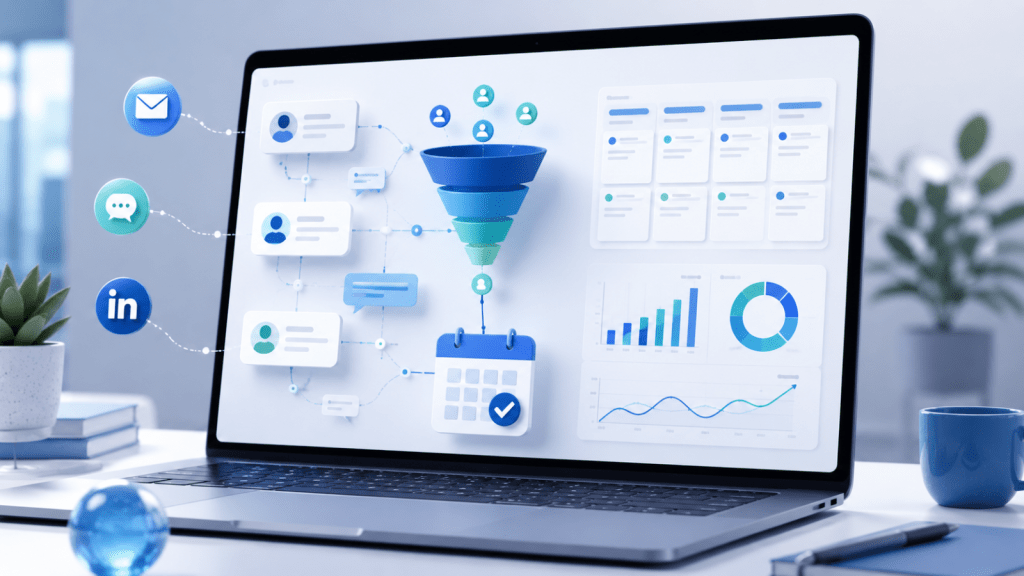
What Makes SaaS LinkedIn Outreach Different
SaaS outreach is different from generic B2B prospecting because the product usually solves a specific workflow problem. Buyers do not respond well to vague promises such as “improve productivity” or “scale faster.” They respond when the message reflects their role, business stage, current priorities, and likely pain points.
A VP of Sales may care about pipeline visibility, rep productivity, or forecast accuracy. A Head of Customer Success may care about onboarding delays, churn signals, or expansion opportunities. A founder may care about replacing manual processes before hiring a bigger team.
This is why strong SaaS outreach starts with use-case relevance, not product features. Your goal is not to explain everything your platform does. Your goal is to show that you understand a specific problem well enough to earn a conversation.
Start With ICP, Pain Points, and Buying Triggers
Before sending messages, define who is actually likely to need a demo now. A broad ICP such as “B2B SaaS companies with 50–500 employees” is not enough.
Break your target accounts down by practical signals:
- Company stage: recently funded, hiring, expanding into a new market, launching a new product, or building a specific team.
- Role: decision-maker, budget holder, technical evaluator, internal champion, or daily user.
- Pain point: manual reporting, low conversion, poor onboarding, fragmented data, slow support workflows, or missed revenue opportunities.
- Trigger: new executive hire, rapid headcount growth, tool migration, regulatory change, pricing change, or visible process bottleneck.
The best LinkedIn prospecting happens when these signals overlap. For example, a company hiring five SDRs may be more receptive to sales enablement software than a company with a stable team and no visible growth signals.
Research and Validate Prospects Before Outreach
A good prospect list is not just a collection of LinkedIn profiles. It should include account fit, role relevance, likely pain, and a clean way to coordinate follow-up across channels.
Start by reviewing the company page, recent hiring activity, funding news, leadership posts, job descriptions, and the prospect’s own activity. Job posts are especially useful because they often reveal internal priorities. A company hiring for RevOps may be struggling with reporting, CRM hygiene, routing, or attribution.
You can also enrich and validate prospect data before building a sequence. Tools such as Snov.io can support workflows like finding business emails, verifying contact details, enriching lead records, or coordinating LinkedIn outreach with respectful email follow-up. The tool matters less than the discipline: do not message people simply because they match a title. Confirm that there is a reasonable business reason to reach out.
Build a High-Quality LinkedIn Prospect List
A smaller, sharper list usually beats a large generic one. For SaaS demo booking, prioritize accounts where your product’s value can be explained in one sentence.
A strong prospect list should answer four questions:
Who is the likely buyer?
What business problem might they care about?
Why might this matter now?
What would make a demo worth their time?
Avoid building lists only by job title. “Head of Growth” at one company may own paid acquisition, while at another they may own lifecycle, partnerships, or analytics. Review profiles and company context before deciding how to approach them.
Segment your list by use case. For example, do not send the same message to founders, revenue leaders, and operations managers. Each group needs a different angle, even if the product is the same.
Write Connection Requests That Feel Relevant
The connection request should not pitch the product. Its job is to create a low-friction reason to connect. Keep it short, specific, and related to their business context.
A good request usually includes one relevant observation and one simple reason for connecting.
Connection request template:
Hi [Name], noticed [company] is growing its [team/function]. I work with SaaS teams on [specific problem area], so I’d be glad to connect and follow what you’re building.
This works because it does not pretend to be deeply personal, and it does not ask for a meeting before trust exists. It gives the prospect enough context to understand why you are reaching out.
Avoid shallow personalization such as mentioning their university, a random post, or a shared group unless it connects to the business reason for outreach. “Saw we both follow SaaS” does not create relevance.
Send a Soft First Message After They Accept
Many teams lose the conversation immediately after the connection is accepted. They treat acceptance as permission to pitch.
Instead, use the first message to establish context and invite a light response. Your goal is to open a conversation, not force a demo.
Soft first message template:
Thanks for connecting, [Name]. I saw [company] is [relevant signal], and I was curious how your team is currently handling [specific workflow/problem]. We often see SaaS teams at that stage run into [pain point], but I don’t want to assume that’s true for you.
This message is useful because it gives the prospect room to correct you, confirm the problem, or ignore the note without feeling pressured. It also shows that your outreach is based on business relevance rather than automation.
Use Follow-Ups to Add Context, Not Pressure
Follow-up timing should give the prospect enough space to respond. A practical rhythm is one message after acceptance, a follow-up three to five business days later, and one final note several days after that. If you also use email, avoid duplicating the same pitch in both channels on the same day.
A respectful multichannel workflow might look like this:
LinkedIn connection request
Soft LinkedIn message after acceptance
Email with a slightly deeper business case
LinkedIn follow-up referencing the same theme
Final short note that closes the loop
The key is consistency without crowding the buyer.
Follow-up message template:
Circling back, [Name]. The reason I asked is that teams scaling [function] often reach a point where [manual process/problem] starts slowing down [business outcome]. Is that something your team is dealing with, or not a current priority?
This follow-up does two important things. It explains why you reached out, and it gives the prospect an easy way to say no. That makes positive replies more meaningful.
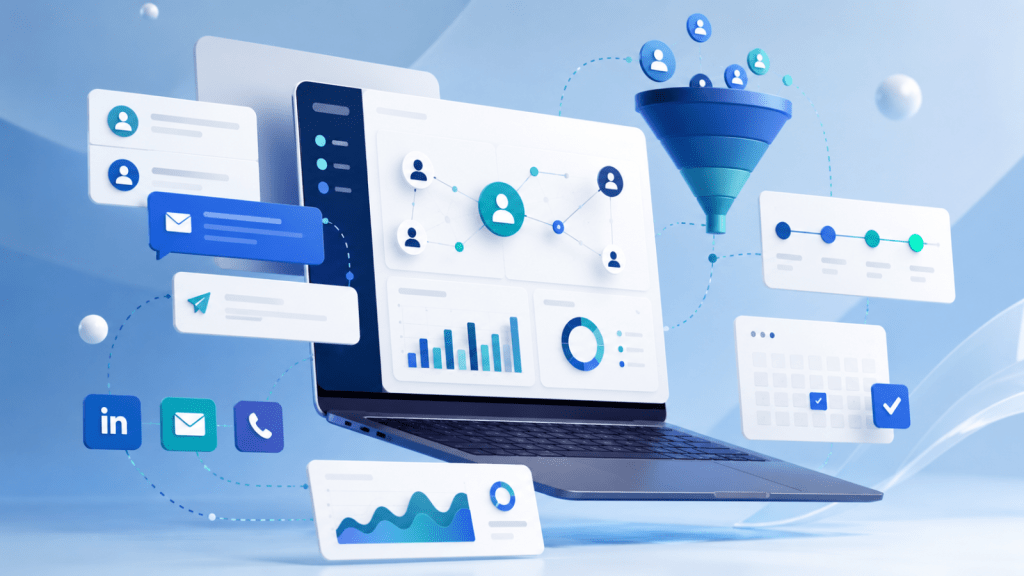
Ask for the Demo Only After Context Exists
A demo invitation should come after you have established possible pain, relevance, or timing. If the prospect has replied with interest, described a problem, or engaged with your follow-up, then a demo request is natural.
Demo invitation template:
That makes sense. Based on what you shared, it may be useful to show how teams use [product/category] to handle [specific use case]. Would it be worth a 20-minute walkthrough next week to see if there’s a fit?
This is better than “Can I book a demo?” because it ties the meeting to a specific use case. It also keeps the commitment small and frames the call as a fit check, not a forced sales conversation.
Before pushing for a demo, qualify the prospect. Do they own or influence the problem? Is the issue current? Is there a business impact? Are they already solving it another way? A demo with the wrong person or weak timing may look good on a dashboard but waste the sales team’s time.
Improve Reply Rates With Content and Profile Optimization
Prospects often check your profile before replying. If your profile is vague, overly promotional, or unclear, your outreach has to work harder.
Your headline should explain who you help and with what problem. Your About section should make your expertise easy to understand. Your featured content should support the conversation you are starting in outreach.
Content also helps warm up LinkedIn outreach. You do not need to post every day. A few useful posts about customer problems, workflow lessons, implementation mistakes, or practical benchmarks can make your name more familiar when a prospect sees your message.
The best content for SaaS outbound is not generic thought leadership. It helps buyers recognize a problem they already have.
Common Mistakes That Reduce Demo Bookings
The most common mistake is pitching too early. A connection acceptance is not buying intent. It is only permission to have a professional conversation.
Another mistake is using personalization that has no business value. Referencing a podcast appearance, company milestone, or LinkedIn post can work, but only when it connects to the reason your product may be relevant.
Automation can also damage trust. Sending messages too quickly, using broken merge fields, repeating the same follow-up across channels, or contacting multiple people at the same company with identical copy can make your brand look careless.
Finally, many teams optimize for demos instead of qualified demos. If SDRs are rewarded only for meetings booked, they may push poor-fit prospects into calls. This creates low show-up rates, weak discovery, and frustrated account executives.
Metrics That Actually Show Outreach Quality
Measure the full path from LinkedIn outreach to pipeline, not just reply volume.
Track these metrics by segment, message angle, and campaign:
Acceptance rate shows whether your targeting and connection request are relevant.
Reply rate shows whether your first message creates enough interest.
Positive reply rate shows whether responses indicate real curiosity or need.
Demo-booked rate shows whether your follow-up converts interest into action.
Show-up rate shows whether the prospect understood the value of the meeting.
Conversion from demo to opportunity shows whether your targeting and qualification are working.
Review message quality alongside the numbers. Ten replies from poor-fit prospects are not better than three replies from companies with real urgency. The goal is not to prove that outreach is active. The goal is to learn which segments, triggers, and use cases produce qualified conversations.
Conclusion
LinkedIn outreach can help SaaS teams book more demos, but only when it is treated as a relevance channel rather than a spam channel. The best results come from clear ICP definition, strong prospect research, business-based personalization, patient follow-up, and careful qualification before asking for time.
A good LinkedIn message should feel like it came from someone who understands the buyer’s context. When your outreach is specific, useful, and measured over time, demos become a natural outcome of better conversations.


 Vicky
Vicky