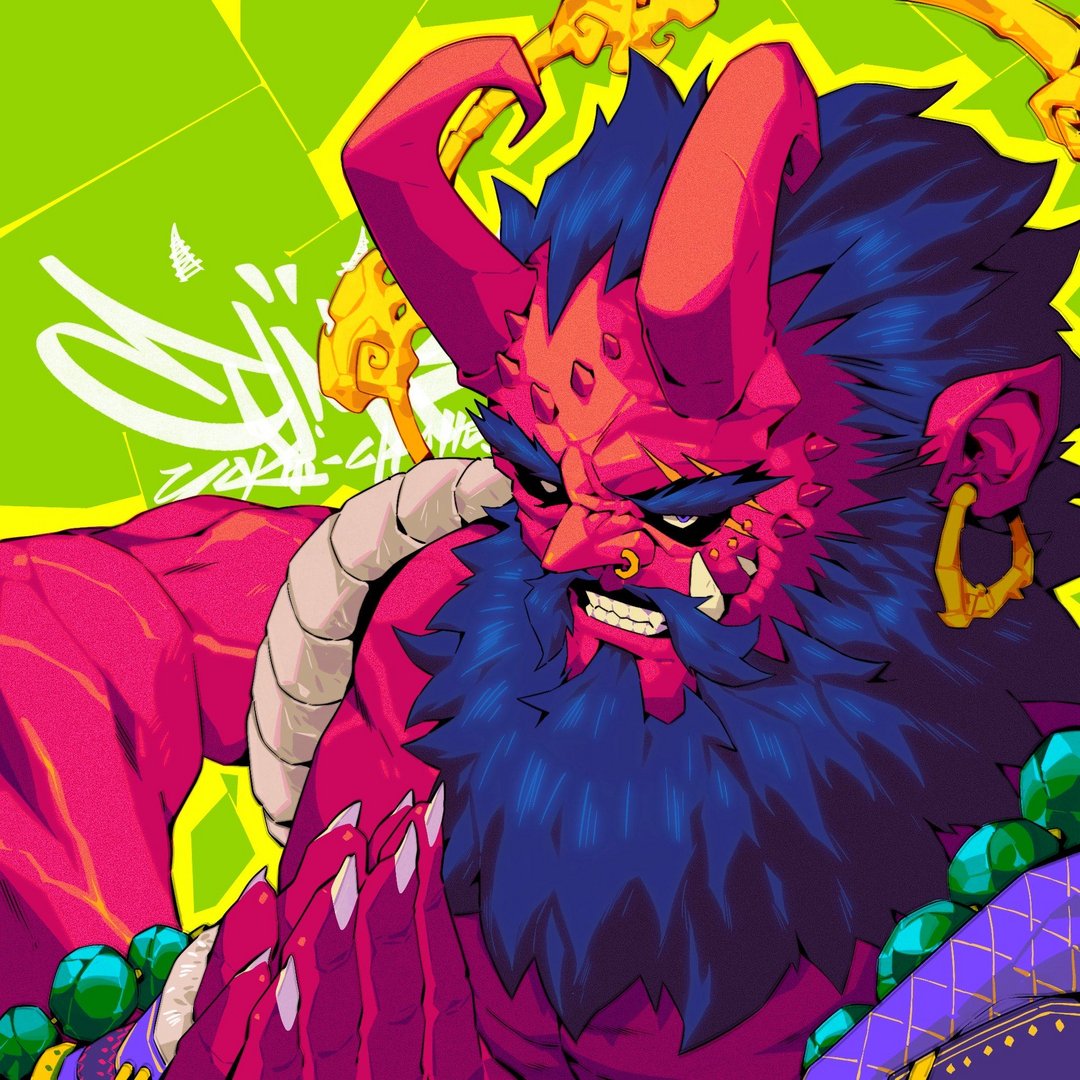
Enma Art
Arya Wasista
Published
In Japanese mythology, Enma, also known as Enma Daiō (閻魔大王) or the Great King Enma, is the ruler and judge of the underworld — Jigoku, the realm of the dead. Originally derived from the Hindu god Yama, Enma was adopted into Buddhist and Shinto beliefs, where he became the supreme arbiter of souls.
He sits upon a grand throne in the Court of the Dead, surrounded by scribes who record every deed a person committed during life. When a soul arrives before him, Enma reads from the Book of Karma, weighing each action to determine the spirit’s fate — whether it deserves rebirth, purification, or torment in one of the many hells.
Enma is often depicted as a stern, imposing figure with fiery eyes, red or dark skin, wearing traditional robes and a judge’s cap. Despite his terrifying appearance, he is not purely evil — he is a divine enforcer of justice, ensuring balance between sin and virtue. His role reflects the moral law of cause and effect central to Buddhist belief: that every action carries a consequence, and even kings must face judgment before Enma