GDPR for managers
Chrisie Creese
Published
Project Description
The client needed a short GDPR awareness course designed specifically for managers. The aim was not to teach legal detail but to provide managers a clear understanding of what GDPR is, why it matters, and what they must do when handling personal data in everyday work. The original material was incomplete and unstructured, so it needed to be redesigned into a concise and engaging session.
My role was to turn the client’s draft notes into a complete training product ready for delivery. I organised the content, simplified the messages, and added interaction points so managers could explore and apply information rather than passively read it. The focus was on practical responsibility, not legislation.
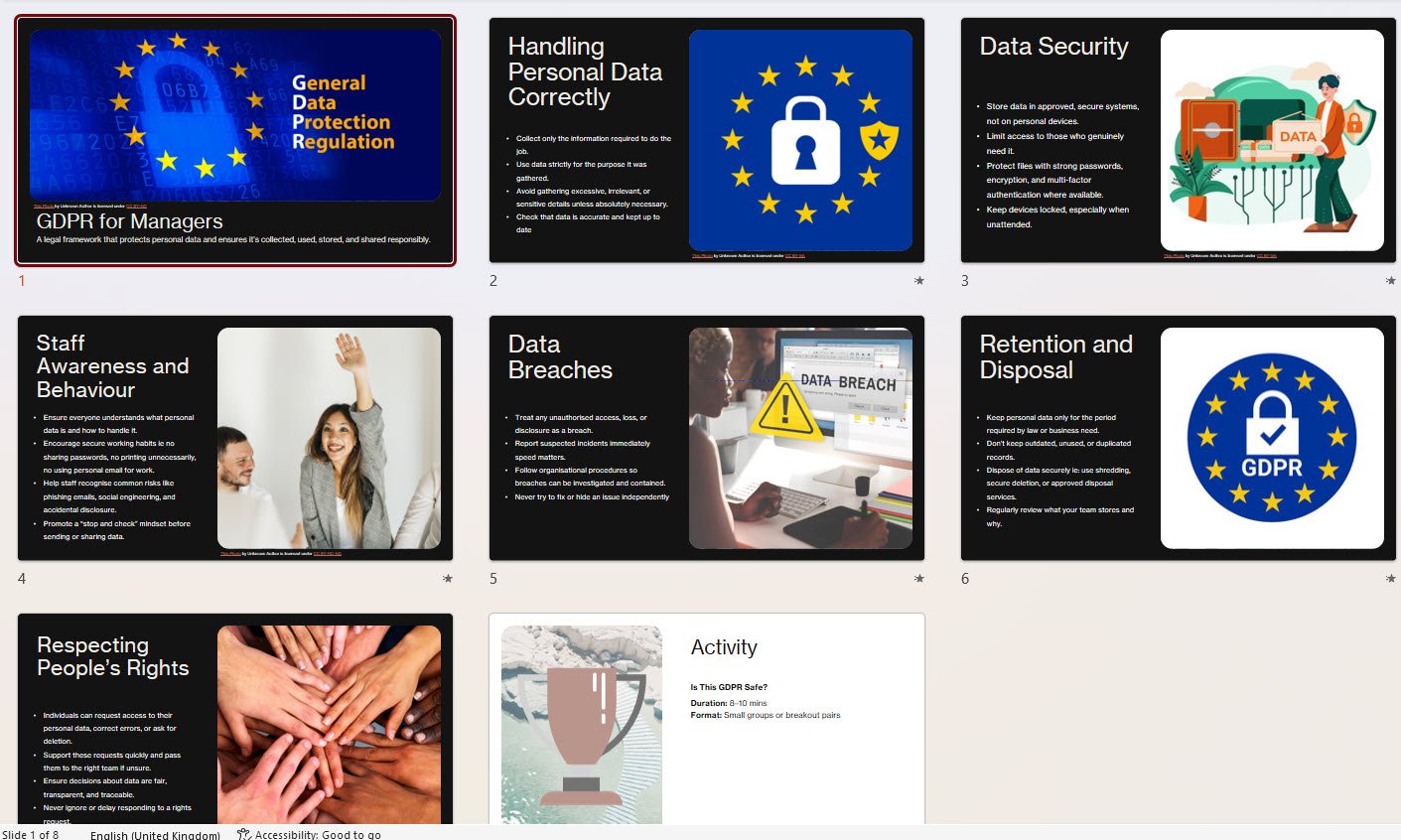
I created a GDPR presentation written in plain language, explaining the purpose of GDPR, how personal data should be handled, and where managerial accountability sits. The presentation used relatable examples to show how GDPR affects decision-making and communication in real situations.
I then developed a manager accountability framework. This transformed complex GDPR expectations into six clear responsibilities: collecting only necessary data, securing information, promoting safe staff behaviour, reporting breaches, managing data retention and disposal, and supporting individual data rights. This gave managers clarity on what GDPR compliance looks like in practice.
To build confidence, I added a scenario-based activity. Managers reviewed realistic workplace examples, identified risks and decided whether their actions were compliant. It helped them apply the framework, recognise common mistakes, and choose appropriate responses.
I also created a short knowledge check quiz to reinforce understanding of key areas, such as data breaches, subject access requests, and retention rules. This confirmed that the core messages were understood.
My instructional design approach focused on turning regulatory content into simple, usable actions. I removed unnecessary jargon and highlighted behaviours that managers can directly influence. By using scenarios and reflection, the training encouraged managers to examine real conversations and decisions, rather than memorising rules.
The final output was a complete, white-label GDPR package that included a presentation, an accountability framework, activities, and assessments. Without further development, it can now be delivered by managers, trainers, or HR teams. The program gives organisations a clear and consistent way to communicate GDPR responsibilities and supports the safer handling of personal data.
This project shows my ability to take compliance content and convert it into an accessible, practical learning experience that improves behaviour, reduces risk and strengthens organisational confidence in GDPR.