Loomly
Social media can be a great way for freelancers to stay visible, attract clients, and build trust over time. It can also be the thing that disappears from your to-do list the moment real work gets busy.
Most freelancers know the pattern. You post consistently for a while, then deadlines, admin, and client requests take over. A few days pass, then a few weeks, and suddenly your social channels have gone quiet again.
That is exactly where AI can help.
Used well, AI does not replace your ideas or your voice. It simply makes the process of turningthose ideas into content faster and less draining. For freelancers, that can mean less time stuck on captions and more time actually creating, sharing expertise, and staying visible.

Why social media feels so hard to keep up with
The hard part is usually not understanding the value of social media. Most freelancers already know it matters. The hard part is keeping it going when everything else is competing for your attention.
Client work comes first. Then there are proposals, revisions, invoices, meetings, follow-ups, and all the other little tasks that come with running your own business. By the time you get to social media, you are often low on time and even lower on energy.
And social media is rarely just one task.
You need an idea. Then you need to turn that idea into something clear and useful. Then you need a caption, maybe an image, maybe a different version for another platform, then a time to publish it, then a moment to check replies and see whether it actually landed.
That is why social media can feel heavier than it sounds. It is not just posting. It is a chain of small decisions, and those decisions add up.
For freelancers, that matters. Every hour spent wrestling with content is an hour not spent on paid work, outreach, learning, or rest. So the goal is not to make social media perfect. The goal is to make it manageable. For people whose day-to-day work already involves planning content, adapting ideas across formats, and keeping channels active, that matters even more.
What AI is actually useful for
There is a lot of noise around AI, and not all of it is especially helpful. For freelancers, the real value is much more practical.
AI is not useful because it can magically create a perfect strategy out of nowhere. It is useful because it helps reduce repetitive work, speeds up small decisions, and gets you unstuck faster.
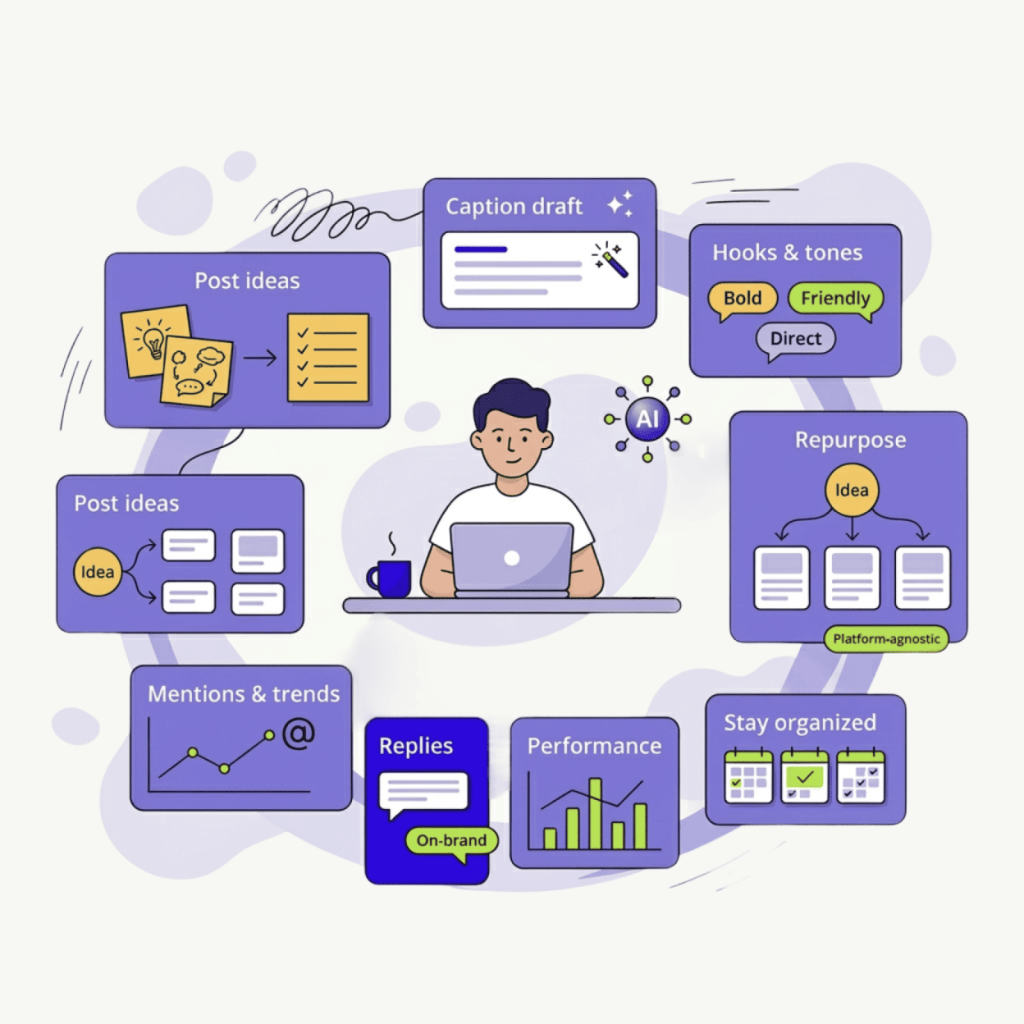
That can mean helping you:
- turn rough thoughts into post ideas
- draft captions faster
- explore different hooks or tones
- adapt one idea for multiple platforms
- monitor mentions and trends
- reply to comments and DMs while staying on-brand
- review performance
- stay organized across channels
The best way to think about it is as a very fast creative assistant. It gives you options, structure, and momentum. You still decide what sounds like you, what feels relevant to your audience, and what is worth posting.
That balance is important. The best social content still feels human. AI just helps you get there with less friction.
Where AI helps freelancers most
For freelancers, AI tends to be most useful in a few specific areas.
1. Generating ideas faster
One of the biggest mistakes freelancers make with social media is thinking every post needs a completely new idea. It does not.
Most people already have more content material than they realize. Client questions, project lessons, behind-the-scenes decisions, mistakes you have learned from, tools you rely on, and opinions about your craft can all become useful posts.
AI becomes much more helpful when you feed it real material instead of asking it for generic content. Give it something grounded in your experience and ask it for different angles. That could mean turning one client question into three post ideas, or turning one project lesson into a caption, a carousel, and a short story.
The point is not to invent content from nowhere. It is to get more value from what you already know.
2. Drafting posts without starting from scratch
The blank page is often the real problem.
Usually, you already know roughly what you want to say. The harder part is shaping it into something polished enough to publish. When you are short on time, that extra step is often where the whole process stalls.
AI can help by drafting a first version, suggesting a stronger opening, rewriting something in a clearer tone, or tightening a caption that is going in too many directions. That does not mean you should publish everything exactly as it comes out. It just means you are not starting from zero every time.
For freelancers, that makes a real difference. A rough first draft is often the thing that gets a post over the line.
3. Repurposing content across channels
You do not need a completely different idea for every platform.
A single insight can become a LinkedIn post, an Instagram caption, a story, a carousel, or a short thread. AI makes that easier by helping you reshape the same core message for different formats without manually rewriting everything from scratch.
That is especially useful if you want to stay visible in more than one place without doubling your workload. Repurposing is often what makes consistency realistic. This is often what makes social media sustainable for freelancers who are constantly switching between creation, planning, publishing, and client work.
4. Staying consistent with your brand voice
This is where better AI tools really stand out.
Generic AI can produce generic content. It often sounds polished, but also forgettable. The more context a tool has about your positioning, tone of voice, and audience, the more useful the output becomes.
That matters for freelancers because your personal brand is usually one of your biggest advantages. You do not want your content to sound like everyone else in your industry. You want it to sound like you, just with less effort required to get there.
This is one reason platforms like Loomly can be more useful than treating AI as a standalone drafting tool. When AI support sits inside a broader social workflow, it is easier to keep content aligned with your brand and channels instead of creating content in a vacuum.
5. Learning from what performs well
Creating content is only half the job. Improving it is the other half.
AI can help you identify patterns in what is working. Which topics get stronger engagement? Which formats lead to more clicks or replies? Which posts look good on paper but do not really land?
That feedback loop matters because it moves social media from guesswork to actual learning. Instead of constantly wondering what to post next, you can build on what your audience has already shown interest in.
For freelancers, that kind of clarity saves time. It means less random experimentation and more informed repetition. Tools like Loomly make that process even more practical by combining AI-powered analytics with a more usable reporting workflow. Beyond tracking performance and brand awareness, it can analyze your analytics data conversationally, help surface trends, create customized visualizations, and turn insights into downloadable PDF reports. That makes it easier to move from raw numbers to actual decisions without adding more admin to your workflow.
6. Keeping engagement as part of the workflow
Publishing is not the end of social media work. Often, it is the beginning.
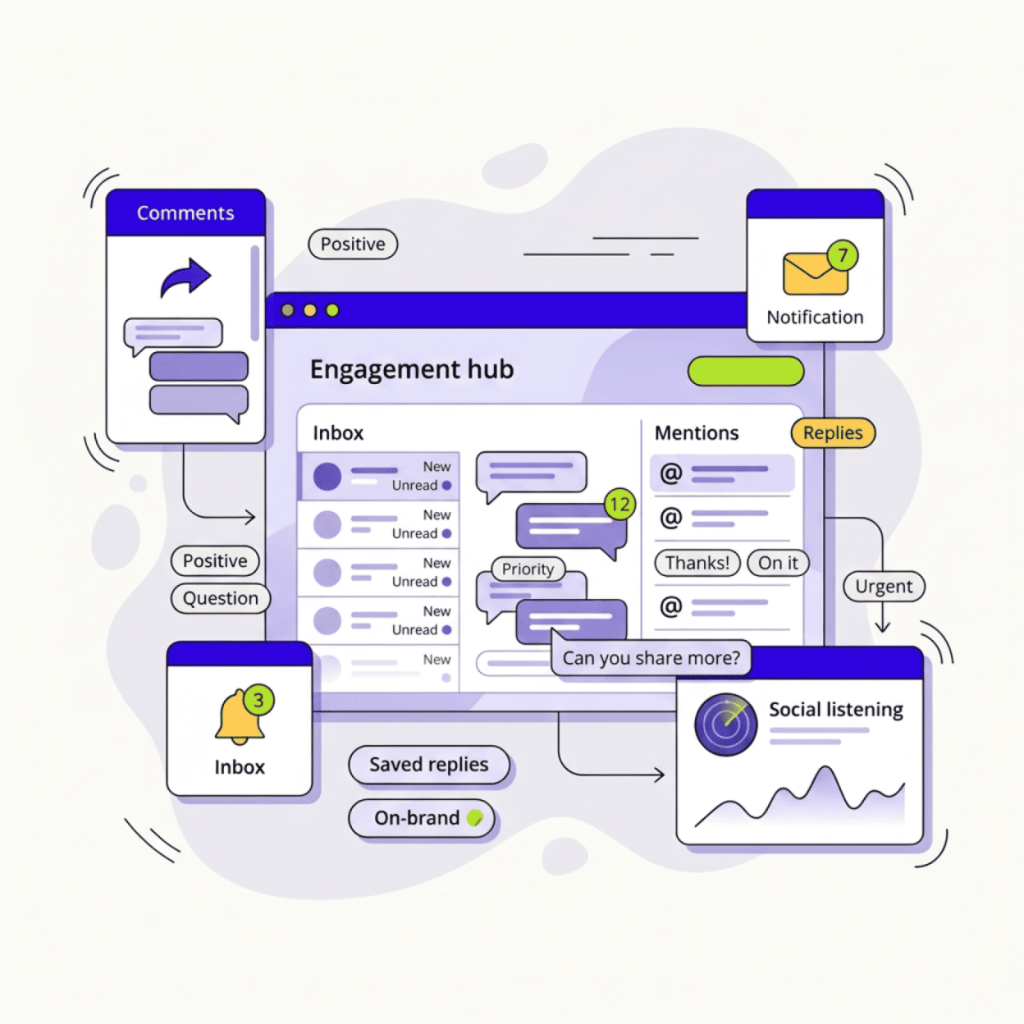
Comments and DMs are where a lot of the actual value sits. They start conversations, build trust, and can lead directly to opportunities. But they are also easy to miss, especially when you are managing multiple channels while trying to do your real job.
AI can help here too. It can flag important messages, suggest responses, and make it easier to stay responsive without sounding robotic or spending half your day checking notifications.
With tools like Loomly, that support can become even more practical: its AI replies and auto-replies can work from your brand context, tone of voice, and guidance, helping you stay responsive at scale without losing consistency.
That makes social media feel less like shouting into the void and more like a manageable two-way channel.
Collaboration and approvals still matter
Not every freelancer works alone. Plenty of freelancers collaborate with clients, contractors, or internal stakeholders. And even solo freelancers often benefit from having a clearer review process before content goes live.
That is why workflow tools still matter alongside AI.
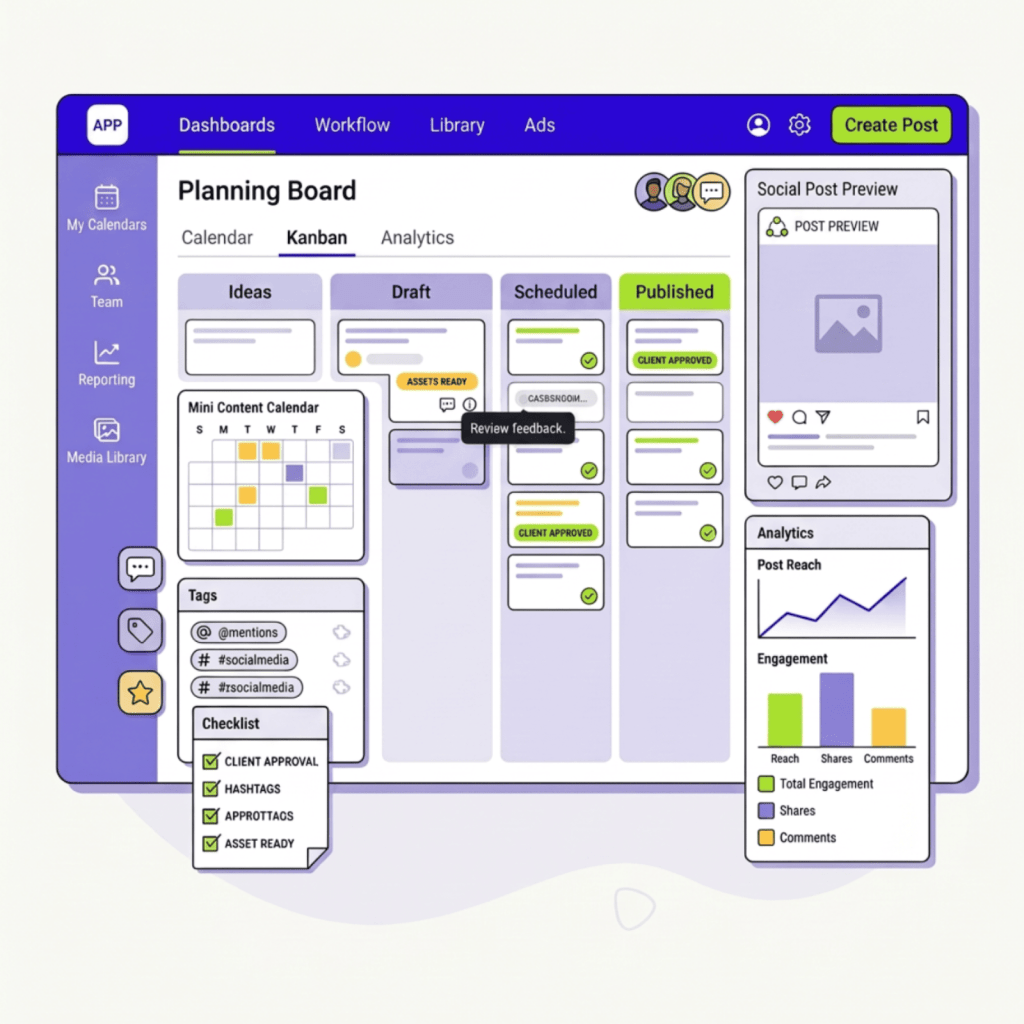
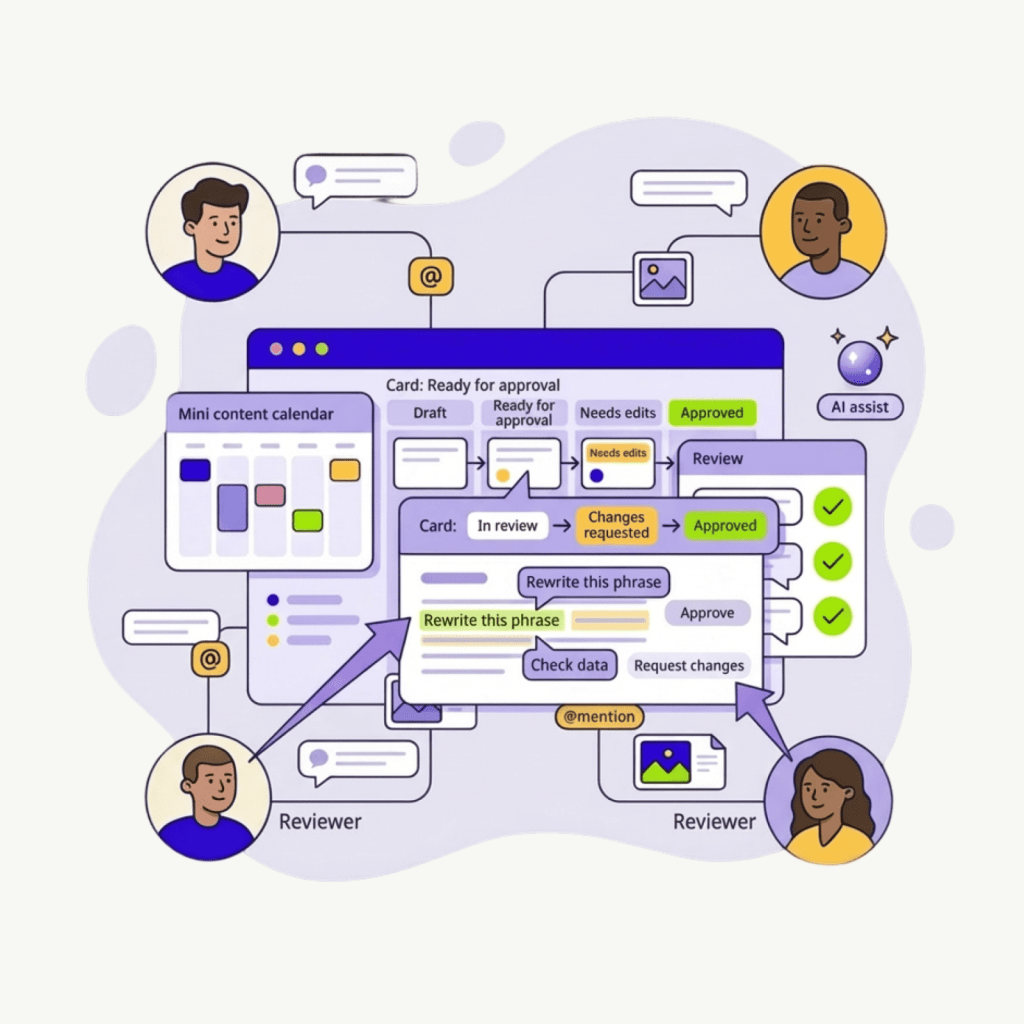
A smart social media system is not just about generating content faster. It is also about knowing what is drafted, what needs edits, what is scheduled, and what is already published. Structure is what turns speed into something useful.
This is where Loomly fits naturally into the game. Beyond AI support, it helps keep planning, approvals, and publishing organized in one place. That is particularly helpful when multiple people are involved, or when you just want your own process to feel less messy.
What consistency really looks like
Consistency does not mean posting every day. For most freelancers, that is unrealistic and honestly unnecessary.
Consistency means showing up in a way that is sustainable. That could be three posts a week. It could be one strong post and a few stories. It could be repurposing one idea across several formats so you are not reinventing the wheel every single time.
This matters because social media is not only about volume. It is about familiarity. When potential clients repeatedly see useful, thoughtful, relevant content from you, you become easier to remember and easier to trust.
AI can help you get to that level of consistency without turning content into a full-time side job. It shortens the distance between “I should post more” and actually having something ready to publish.
Conclusion
Social media should support your business, not drain it.
Freelancers do not need more pressure to post more, be everywhere, and somehow keep up with every platform trend. They need a simpler system for staying visible.
That is why AI is useful when it is used well. Not because it replaces creativity, but because it removes friction. It helps generate ideas, draft content faster, adapt posts across channels, learn from performance, and keep engagement from slipping through the cracks.
The bigger shift is not just technological. It is strategic. When you know what social media is doing for your business, and you have tools that make the workflow lighter, you are much more likely to keep going.
Do you want a platform that brings these pieces together in a practical way? Then Loomly is worth exploring. Try Loomly with a 7-day free trial and see how it can help

 Vicky
Vicky
 Twine
Twine